Territorial Cup Countdown Series: Domination from down south defines next 10 meetings

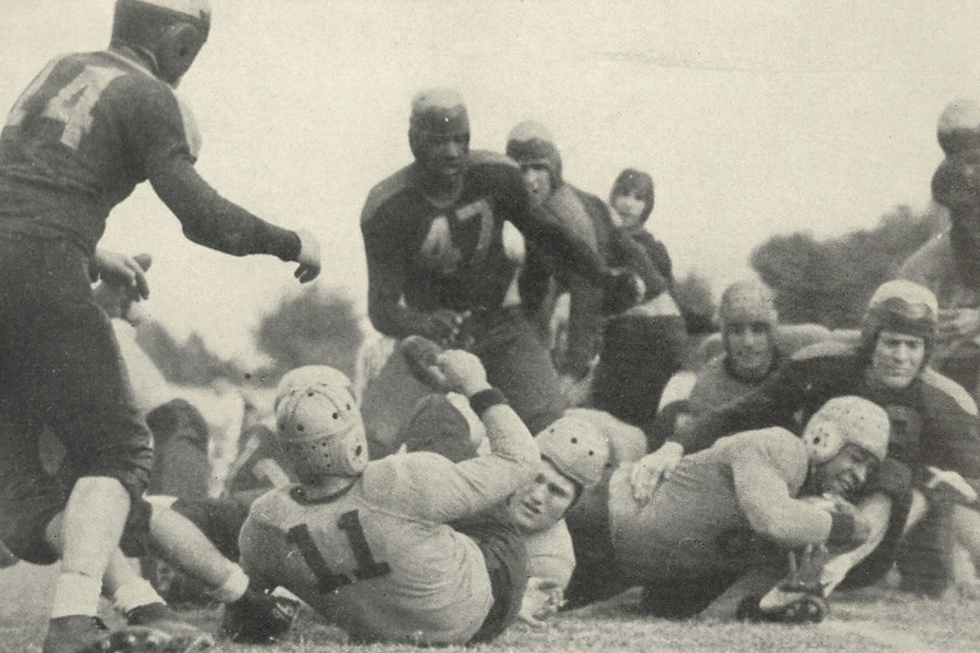
Last week, we kicked off our countdown to the 100th playing of the Territorial Cup by examining the origins of the rivalry. The next 10 games ushered in a new milestone for Arizona State, and laid the groundwork for what would soon become an annual meeting between the two schools.
When we left off, the University of Arizona was on a nine-game winning streak against their rivals at Arizona State Teacher's college, shutting out their opponents in four consecutive and eight of nine games. The 1931 season would bring a new element to the matchup: A home field for Arizona State.
The first 10 meetings were all held in Tucson, owing to the fact that there was no suitable home field in Tempe or the surrounding area. That changed with the arrival of Irish Field. Opened in 1927, it would play host to the first meeting between Arizona State and Arizona on October 31, 1931. The Bulldogs woud capitalize on this debut, jumping out to a 19-0 lead behind the play of halfback Norris Steverson and fullback Horace Smitheran, holding on to claim a 19-6 win for their first triumph since the inaugural 1899 meeting. The Bulldogs found success running the Warner System offense under head coach Ted Shipkey, rattling the Wildcats defense and showing themselves as equal to their rivals.
That equality would be short-lived, as the Wildcats would win the next nine meetings, culminating in a 67-0 shutout on September 28, 1946 that still stands as the largest margin of victory in the rivalry. However, the important step of hosting was finally achieved. Irish Field would give way to Goodwin Field in 1936, establishing the precedent of alternating hosting duties. After Tucson hosted in back-to-back years in 1934 and 1935, Tempe would return the favor in 1941 and 1942. After a break due to World War II, the series would resume in Tucson with the 1946 edition and has been played continuously since then, hosted in Tempe in odd-numbered years and Tucson in even-numbered years.
Despite the 18-2 disadvantage in the rivalry to date, Arizona State College was on the verge of turning the rivalry into one of the most fiercely contested games in college football. Join us next week for the years that laid the groundwork to for the rivalry's early peak.


Comments